
About the Project
SOS-GVC aims to introduce an innovative theoretical and empirical framework to assess the role of Micro and Small Enterprises (MSEs) in the reconfiguration of Global Value Chains (GVCs) and to evaluate the regional consequences of their strategies.
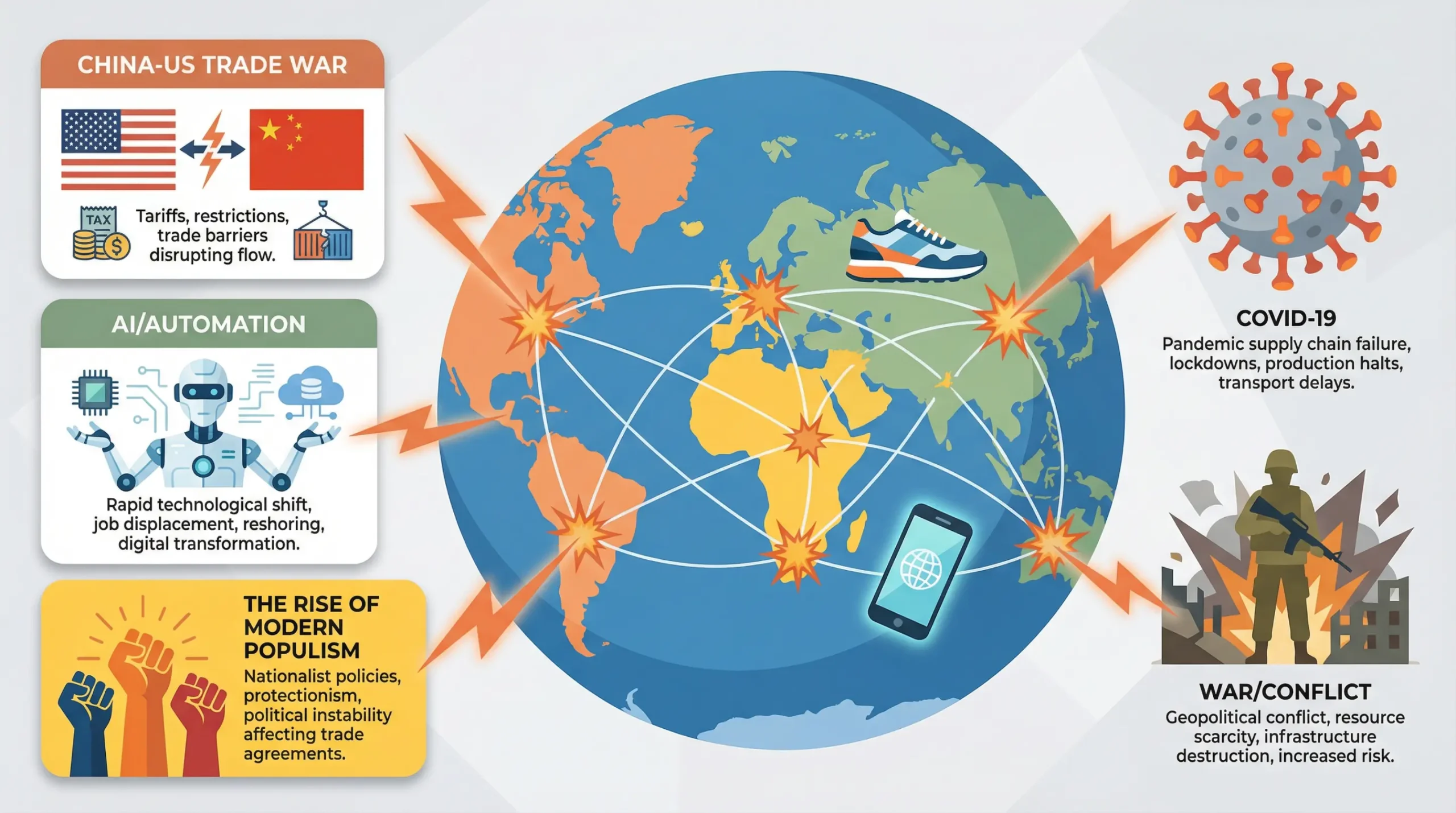
Over the past decades, GVCs have emerged as a defining feature of the global economic landscape. Today, most goods and services result from complex production networks involving firms located across multiple countries. While these networks have enhanced efficiency gains and specialization, they have also increased firms’ exposure to global disruptions.
The structure of most GVCs has undergone significant restructuring in recent years, influenced by an array of economic, political, and structural disruptions, such as Brexit, the COVID-19 pandemic, trade wars and geopolitical conflicts. These disruptions have raised concerns about the future capacity of GVCs to operate effectively and deliver consistent benefits to their participants. Several firms have responded to these shocks by relocating their production activities through reshoring, friendshoring and nearshoring.
The reconfiguration of GVCs carries significant implications for both direct and indirect participants in these networks, as well as the regions where these businesses are located. Understanding the forces behind GVC reconfiguration is essential to enhance the development of more resilient economic systems capable of withstanding future shocks and uncertainties.
Global Value Chains in a Polycrisis: What Role for Micro and Small Enterprises?
Why Micro and Small Enterprises Matter
The current debate on GVC reconfiguration is strongly centred on medium and large Multinational Enterprises (MNEs), whose foreign direct investment (FDI) decisions attract public and media attention due to their large potential employment effects. However, such a picture is incomplete, in that it overlooks the key role played by MSEs in GVCs.
SOS-GVC proposes a novel framework to investigate how MSEs influence GVC reconfiguration processes and how their strategies affect firms, regions, and local resilience. The project introduces three core research questions:
- How do MSEs reconfigure their GVC strategies when they are directly involved in global production networks?
- How can MSEs indirectly influence GVC reconfiguration by enhancing the attractiveness and stability of domestic regions?
- How do MSE strategies within GVCs impact regional development and regional resilience?
How Micro and Small Enterprises (MSEs) can save and sustain Global Value Chains
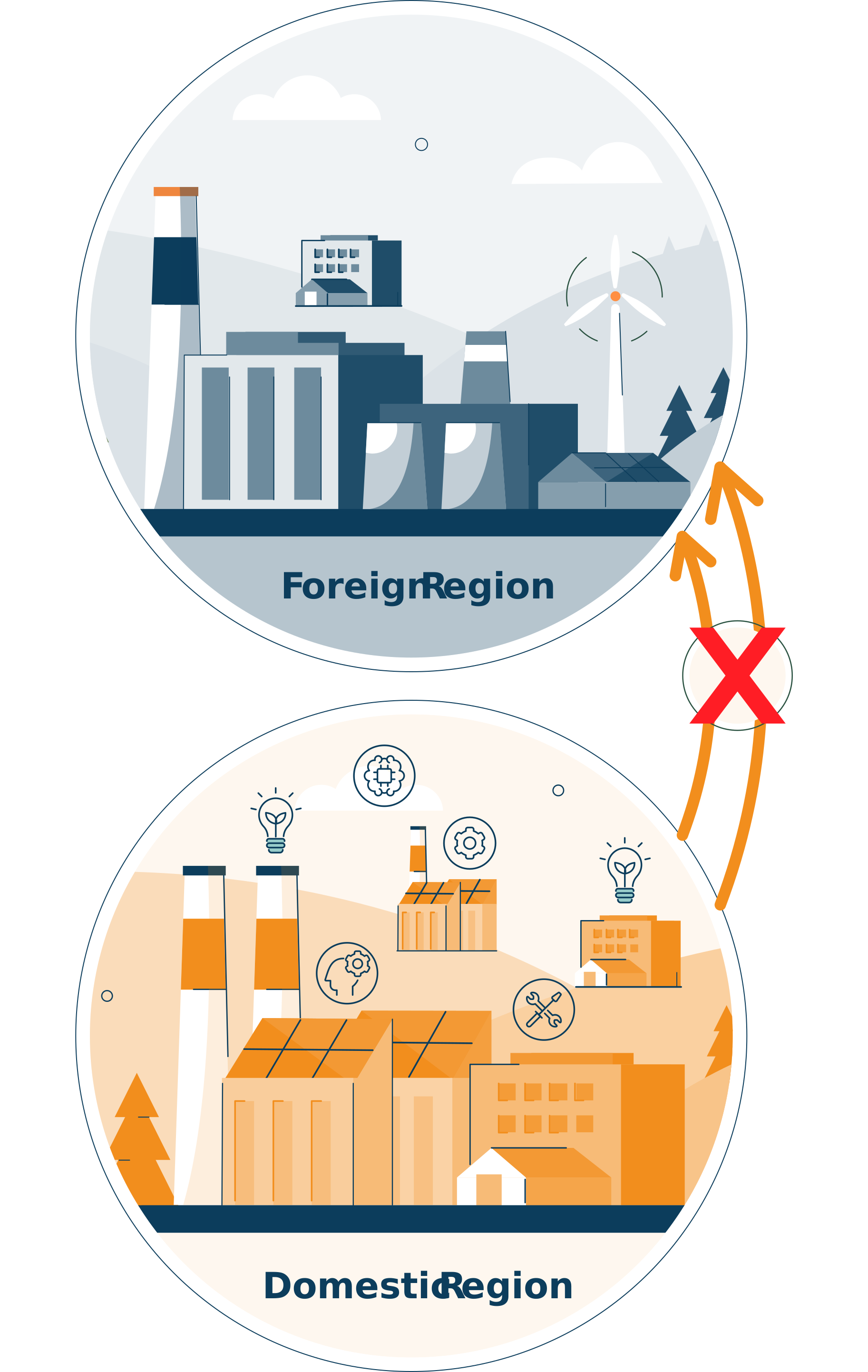
Safeguarding domestic subcontracting networks by engaging in GVC risk prevention strategies
WP2: Risk prevention strategies by MSEs and GVC reconfiguration
Type of GVC participation: Indirect
Safeguarding domestic subcontracting networks by engaging in GVC risk prevention strategies
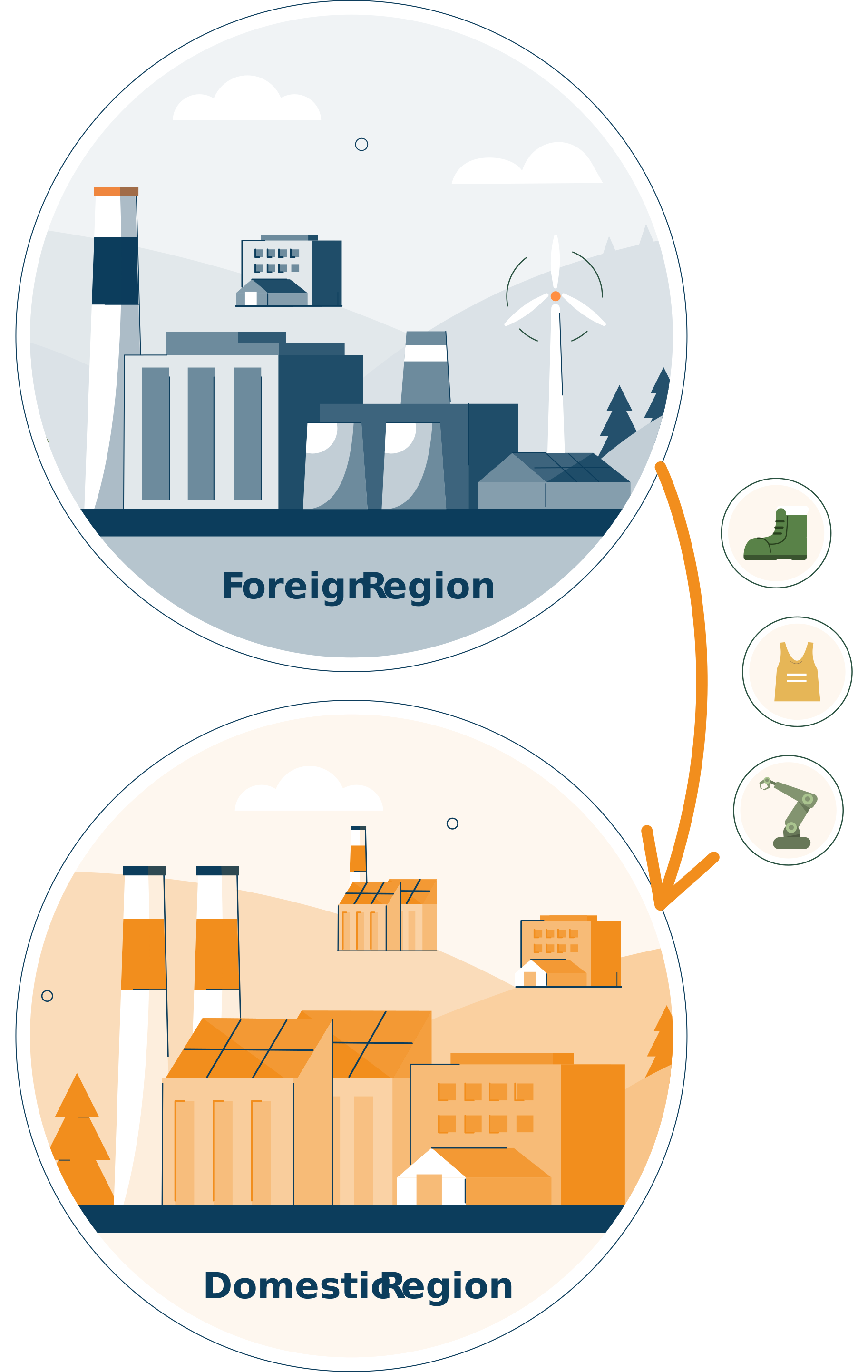
Outsourcing GVC activities back to domestic countries, bringing them closer to home and fostering collaboration with allied countries
WP1: causes and implications of GVC reconfiguration strategies by MSEs
Type of GVC participation: Direct
Outsourcing GVC activities back to domestic countries, bringing them closer to home and fostering collaboration with allied countries
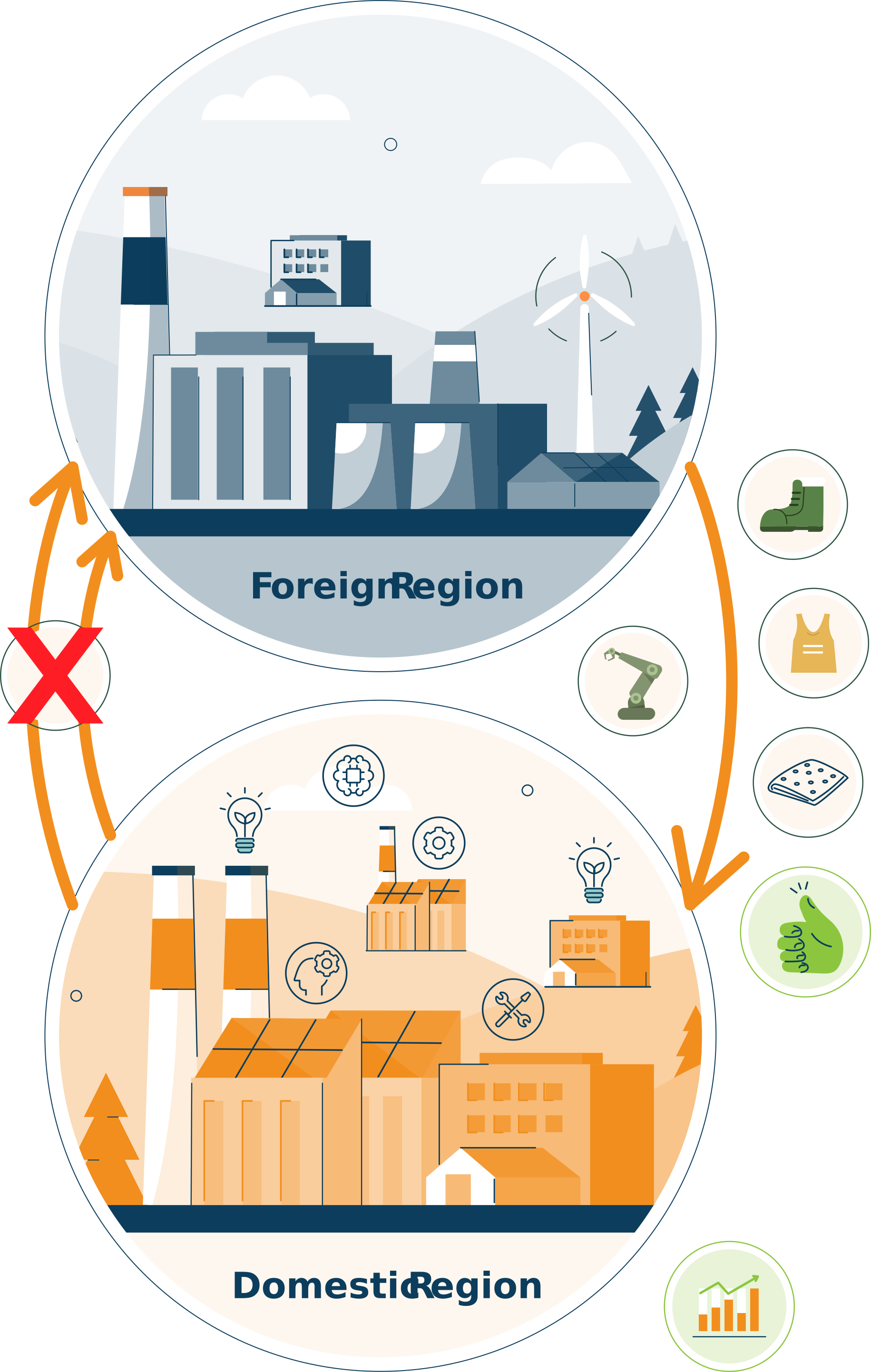
Supporting local economies by enhancing regional resilience and sustainability
WP3: MSEs strategies in GVCs as sources of regional resilience
Type of GVC participation: Direct and Indirect
Supporting local economies by enhancing regional resilience and sustainability
MSEs, Regions, and Resilience
Through their direct and indirect participation in GVCs, MSEs can significantly shape the evolution of global production networks. At the same time, their activities generate substantial regional effects.
Most MSEs are deeply rooted in local economic structures and represent a vital resource for regional development. Their strategic responses to global shocks can strengthen regional resilience, enhancing the capacity of local economies to absorb, adapt to, and recover from disruptive events.
A regional perspective on the interaction between MSEs and GVCs is therefore essential to design effective place-based policies aimed at fostering sustainable growth and resilience.
Work Packages
WP1: causes and Implications of GVC reconfiguration strategies by MSEs
This WP aims to develop a comprehensive empirical framework for the analysis of the determinants and consequences of GVC reconfiguration strategies by MSEs, comparing these strategies with those implemented by large multinational firms. The analysis considers firm-level, regional-level, and policy-related factors shaping MSEs’ engagement in global value chains. The WP also examines how different reconfiguration strategies affect the intensity, continuity, form, and geography of international involvement, as well as their implications for firm performance and competitive positioning.
WP2: risk prevention strategies by MSEs and GVC reconfiguration
This WP aims to construct and test a theoretical framework to analyse how risk prevention strategies implemented by MSEs operating as local subcontractors interact with the reconfiguration strategies of lead firms within global value chains. The WP focuses on strategic interactions under uncertainty, examining both how proactive MSE strategies can influence production relocation and investment decisions by client firms, and how changes in the presence or strategies of lead firms feed back into MSE upgrading and adaptation. The framework is tested empirically to assess how these two-way dynamics shape GVC reconfiguration at the local level.
WP3: MSEs strategies in GVCs as sources of regional resilience
This WP investigates how the micro-level dynamics identified in the previous WPs contribute to the ability of regions to withstand and adapt to economic shocks. The analysis adopts a regional perspective to assess how different firm strategies within GVCs influence regional development, resilience, and patterns of value creation.
Particular attention is given to structural change and the evolution of regional economic functions over time, examining how firm entry, exit, and transformation interact with GVC reconfiguration processes.